

Practice with (the) Fire
Takeaways from a practice with one of the WNBA's newest franchise

“YEAH … I like it, Liz! Great job!”
Liz is the team psychologist for the Portland Fire, but at this moment, the task was to defend a 3-point shot from the corner in a shooting session involving some of the top basketball players on the planet. The accolade Liz earned for the speedy closeout came from first-year WNBA head coach Alex Sarama.
“How many teams have their psychologist help with shoot-around?” Alex casually asked as we continued our conversation at the conclusion of the Fire’s first practice in the Moda Center. The expansion team was preparing for its first home pre-season game against the Los Angeles Sparks.
“How many teams have their psychologist help with shoot-around?”
I had no answer for Alex’s question — I’m not sure how many team psychologists help with shoot-arounds for professional organizations. But it doesn’t take long to realize that there are not many walls separating the different branches of the Fire organization.
As the players took their seats for the first of three short film sessions during the practice, seemingly every person associated with the Fire gathered around the big-screen TV stationed on the sidelines of the brand new court to watch Alex coach through the clips. With two rows of seats close to the TV, the players had the best seats in the house. But it was clear this wasn’t an exclusive activity — the coaches wanted all of the staff to be prepped for Sunday’s game strategy.
The 2-hour practice that followed was competitive and educational. Between the film sessions and the on-court activities, not a moment was wasted. Drills were intentional, but allowed the coaches flexibility to coach when and where they saw an issue. Even from our second-row seats, you couldn’t help but to be engaged.
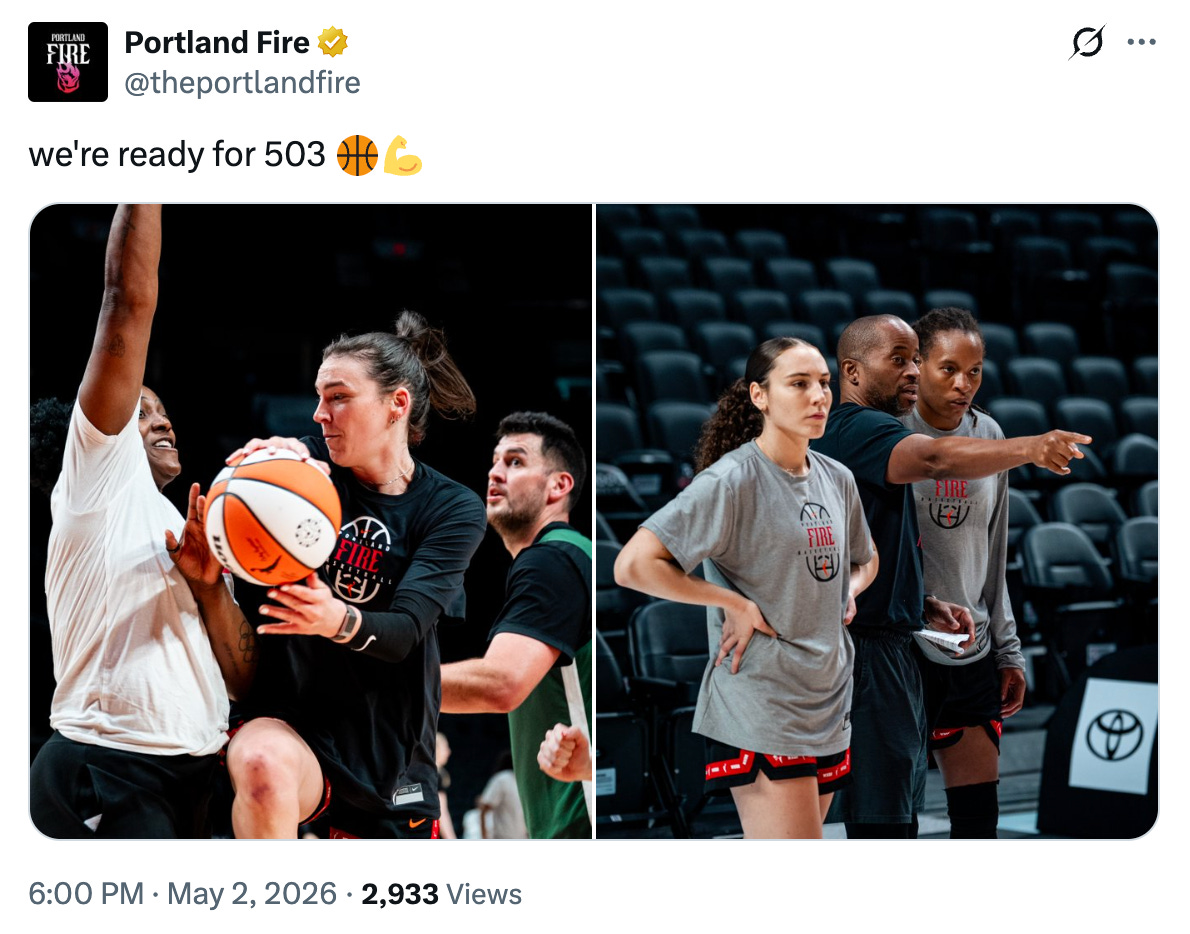
During early-practice shooting drills, coaches were like Liz, jumping in-and-out of drills to help contest shots. Scout players were deep in conversation discussing the particulars of the actions Los Angeles could run and what Kelsey Plum might do in the next day’s game. Small-sided games were used to teach and reinforce key concepts on both sides of the ball. Players were constantly asked questions to see what they recalled from a previous session or what they had learned during this practice.
And there were smiles. Lots of smiles from players, coaches and support staff (and the observers) over the practice.
Here are 4 quick takeaways from my time at the practice.
Look to “un-silo” your program
Who are the people like Liz in your organization? Strength and conditioning coaches? Administration? Parents? Donors? Teachers? Fans?
How can you create a program that strengthens relationships, rather than keep stakeholders in their silos? Maybe invite your athletic director to participate in a shooting drill or hold an open practice for parents or have players from your feeder program sit on the bench during games.
Making film more practical
The Fire broke down what would have been a 30 minute film session outside into 3 separate “mini-clinics” where the longest lasted 10 minutes. The film sessions served double duty as water and rest breaks for the players.
More importantly, players watched film and then immediately started activities related to what they just saw.
In addition, a staff member recorded each one of these mini-clinics by the coaches for future use. This is a great way to archive practice commentary and see your growth.
Game planning with 3v3
The Fire used small-sided games to help install the game plan against Los Angeles for both the offense and defense.
It’s early in the season, so realistically a practice like Saturday’s probably won’t be an option for a WNBA team in July or August or for back-to-backs. But the approach has benefits for coaches at all levels to consider, such as installing concepts against what players will actually see and the opportunity for players to develop their skills.
Portland used a lot of 3v3 activities to fine-tune offensive actions and off-ball movement as well as their defensive coverages such as close-outs and traps. They were limited to two baskets, but each end of the floor worked as a station each with a certain focus. They did run some different 5v5 situations against the scout team, but most of the coaching happened in the 3v3 activities.
Questions to consider: What concepts in your system could you isolate in a 3v3 setting? What two or three actions from a main rival could you turn into a 3v3 SSG?
Individual scouts
The Fire placed velcro on some reversible jerseys, with each one having a different Sparks’ players’ photo on the front.
This might not be practical at lower levels, but another coach who was watching the practice suggested having the opposing team’s jersey numbers printed to velcro on. We have several different colored pinnies so we can identify different players.
Really enjoyed your post. You can build the most sophisticated practice plan in basketball, integrate every department, run film like a clinic, and none of it holds if the people doing the work look miserable while they're doing it. What athletes can count on isn't just the structure, it's that the people running the structure actually want to be there with them.